

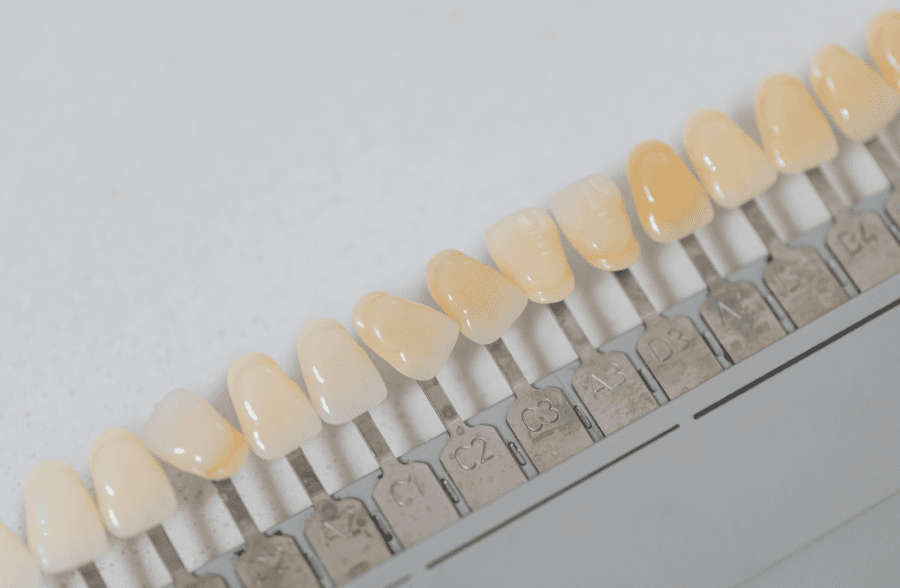
The Real Reason Your Teeth Go Yellow
Most people assume yellow teeth come down to what you drink. Cut the coffee, skip the red wine, and you’ll be fine.
That’s part of the story. But only part.
The bigger reason teeth yellow over time has nothing to do with what you’re consuming, and no amount of brushing will fix it.
There are two layers to your teeth
To understand why teeth change colour, you need to know how they’re actually made.
Every tooth has two main layers. The outer layer is enamel, the hardest substance in the human body, naturally semi-translucent and white. Underneath that is dentine, a thicker layer that’s naturally yellow.
The colour you see when you look at your teeth is a combination of both. When your enamel is thick and healthy, it reflects light well and the white shows through. As enamel thins, the yellow dentine underneath becomes increasingly visible.
This is what most people don’t realise: a lot of yellowing isn’t a stain on the surface. It’s a structural change happening inside the tooth.
Why enamel thins over time
Enamel wears gradually through decades of use. Chewing, grinding, acidic foods and drinks, and even aggressive brushing all contribute. After age 30, enamel thins at roughly 1 to 2 micrometres per decade. Slow enough that you don’t notice it happening, but significant enough over a lifetime.
Here’s what makes it more complicated: enamel doesn’t regenerate. Once it’s gone, it’s gone. Brushing harder won’t bring it back.
And dentine changes too
It’s not just that enamel gets thinner. Your teeth continue producing dentine throughout your life. This secondary dentine tends to be darker and more yellow than the original layer, and as it builds up, the overall appearance of the tooth becomes less bright.
So you’re dealing with two things happening at once. The white outer layer thinning, and the yellow inner layer deepening. For most people, this is why teeth look noticeably more yellow in their 40s, 50s, and beyond compared to earlier years.
Then there’s the surface staining on top of all that
Coffee, tea, red wine, berries. These do contribute. They contain compounds that adhere to enamel and build up over time. Tobacco is one of the worst offenders.
But surface staining and structural yellowing behave very differently, and they respond to different treatments.
Surface stains sit on or just below the enamel and can be reduced through professional cleaning and whitening. Structural yellowing is intrinsic, meaning it’s embedded within the tooth itself. It doesn’t respond to brushing or surface-level products.
This is why whitening toothpastes often disappoint people. They work on surface staining, but they can’t reach what’s happening deeper in the tooth structure.
What actually works
Professional whitening uses a higher concentration of hydrogen peroxide than anything available over the counter, which allows it to penetrate the enamel and address discolouration within the tooth structure, not just on the surface.
At Fendalton Dental we use the Epic X Biolase Laser, which activates the whitening gel to work faster and more effectively. The result is a meaningful change in shade, even for teeth where the yellowing is structural rather than just surface staining.
It won’t reverse enamel loss. Nothing does. But it can significantly brighten the overall appearance of the tooth, regardless of whether the cause is lifestyle, age, or both.
The short version
Yellowing teeth aren’t a sign that you’re not brushing properly. They’re largely a sign that you’re getting older and that your teeth have had decades of use. That’s normal. It’s also very treatable.
If it’s something that’s been on your mind, a conversation with us is a good place to start. We can look at what’s actually causing it in your case and tell you what’s achievable.
Interested in teeth whitening? Find out more about our treatments at Fendalton Dental or call us on 03 351 1188 to book a consultation.